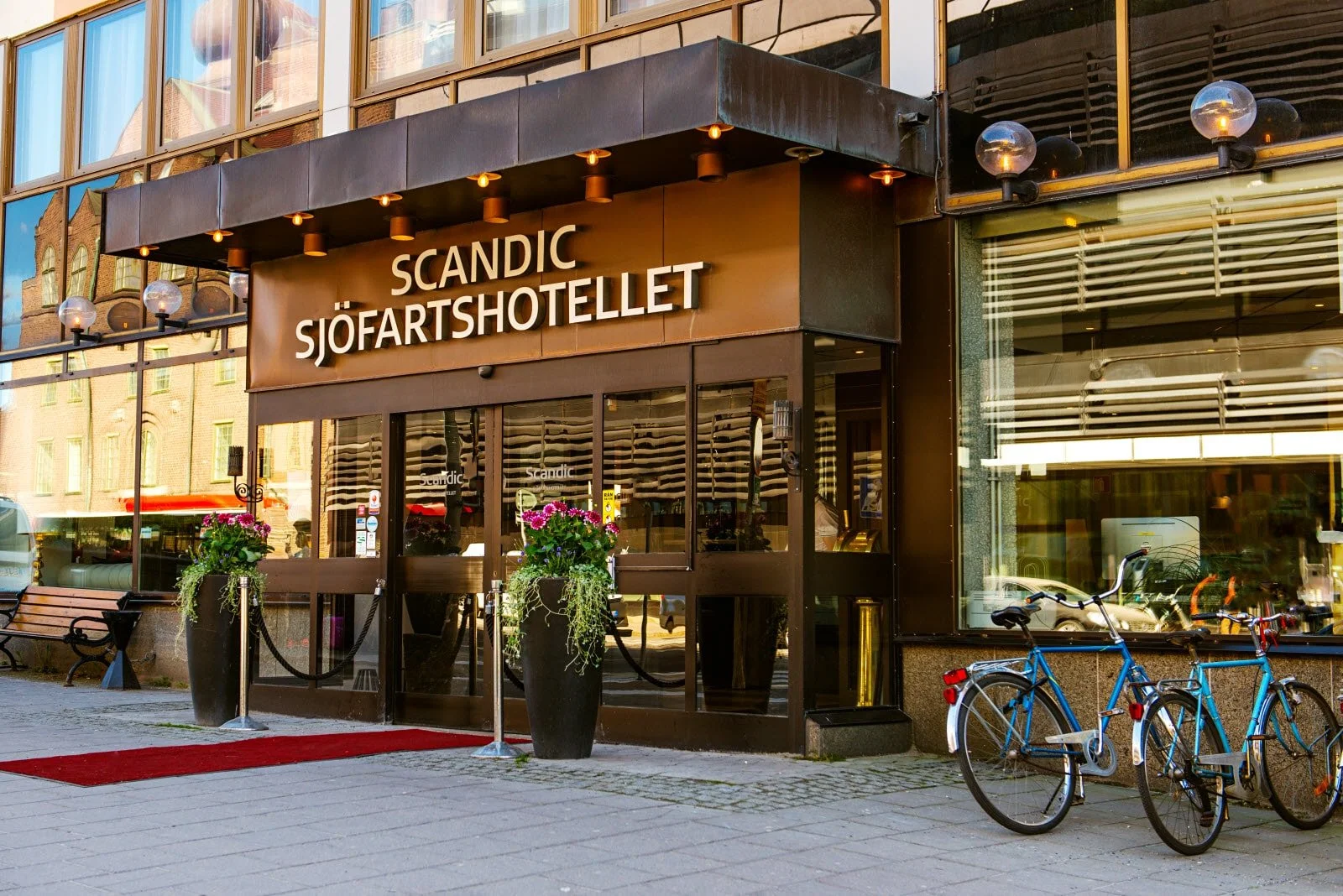
Overview

Scandic wanted to grow ancillary revenue → breakfast, early check-in, late check-out, and other add-ons → but the existing flow wasn't converting, and front-line staff were stuck patching the gaps between broken systems and confused guests. I worked on both sides of the problem: researching how guests actually experience the booking flow, and how hotel staff experience the guest journey day to day.
I ran interviews with hotel staff, participated in workshops mapping the staff perspective end-to-end, and led a guerrilla usability study testing a new stepper-based UI for adding extras. From there, I synthesized findings into prioritized design recommendations for the team.
Role: UX Researcher
Method: Staff interviews, workshops, guerrilla usability testing, prototype evaluation
Two sides of the same flow
Block AInside the staff workflow
Through interviews and workshops with hotel staff, I mapped the guest journey from pre-stay to check-out → what gets communicated, how, and where it breaks down. The clearest pattern: guests are hit with too much information at check-in and tune out, then come back to the staff with the same questions later. Meanwhile, staff were stuck doing manual workarounds →
re-entering receipt details, chasing missing loyalty data, and fielding calls meant for other departments.
The opportunity wasn't more communication; it was better-placed communication: move static information to pre-arrival emails and QR codes, and free up the check-in moment for a personal welcome and upselling.
Block BTesting the upsell flow with guests
On the guest side, I ran a guerrilla usability study with seven travelers → both business and family → testing a new stepper UI for adding breakfast, early check-in, and late check-out. The current flow used a scrolling dropdown inside a pop-up; the goal was to see if a stepper made it faster, clearer, and more trustworthy.
It didn't. Users couldn't tell if "x1" meant one person, one night, or the whole stay → and that ambiguity made people hesitate to add anything at all.
What the testing revealed
The stepper failed validation for services like breakfast, where the real logic depends on guests and duration, not a simple count. But the test also surfaced a clear win: a card-based "Add +" layout tested much better than the existing carousel, and people expected added extras to show up directly in their booking summary → not buried in a separate, scrollable section.
Three findings stood out:
#1
Replace quantity steppers with clear toggles
("Adding breakfast for the whole party")
#2
For multiple items, use a "Add +" → a validated quick win
#3
Extras are visible directly in the “Stay Card”, not a hidden list.
From insights to roadmap
From insights to roadmap
I prioritized the findings by impact and effort, separating quick wins from longer-term work:
Immediate: Fix the steppers, ship the card UI, and integrate added extras into the Stay Card
Long-term: Build toward a true, flexible cart system across the booking flow
On the staff side, the same logic applied: fix the core system failures causing manual rework first (receipts, loyalty, payment), then build the tools → mobile host devices, an official internal chat → that let staff focus on the personal service they actually want to give.
The research gave Scandic's product team a clear, sequenced path: stop the bleeding on broken systems and confusing UI first, then invest in the bigger redesign. For staff, it reframed the problem from "more communication" to "the right communication in the right place." → letting digital channels carry the routine information so staff could focus on the moments that matter.
Want to see the prototypes or talk through the process?
Get in touch.