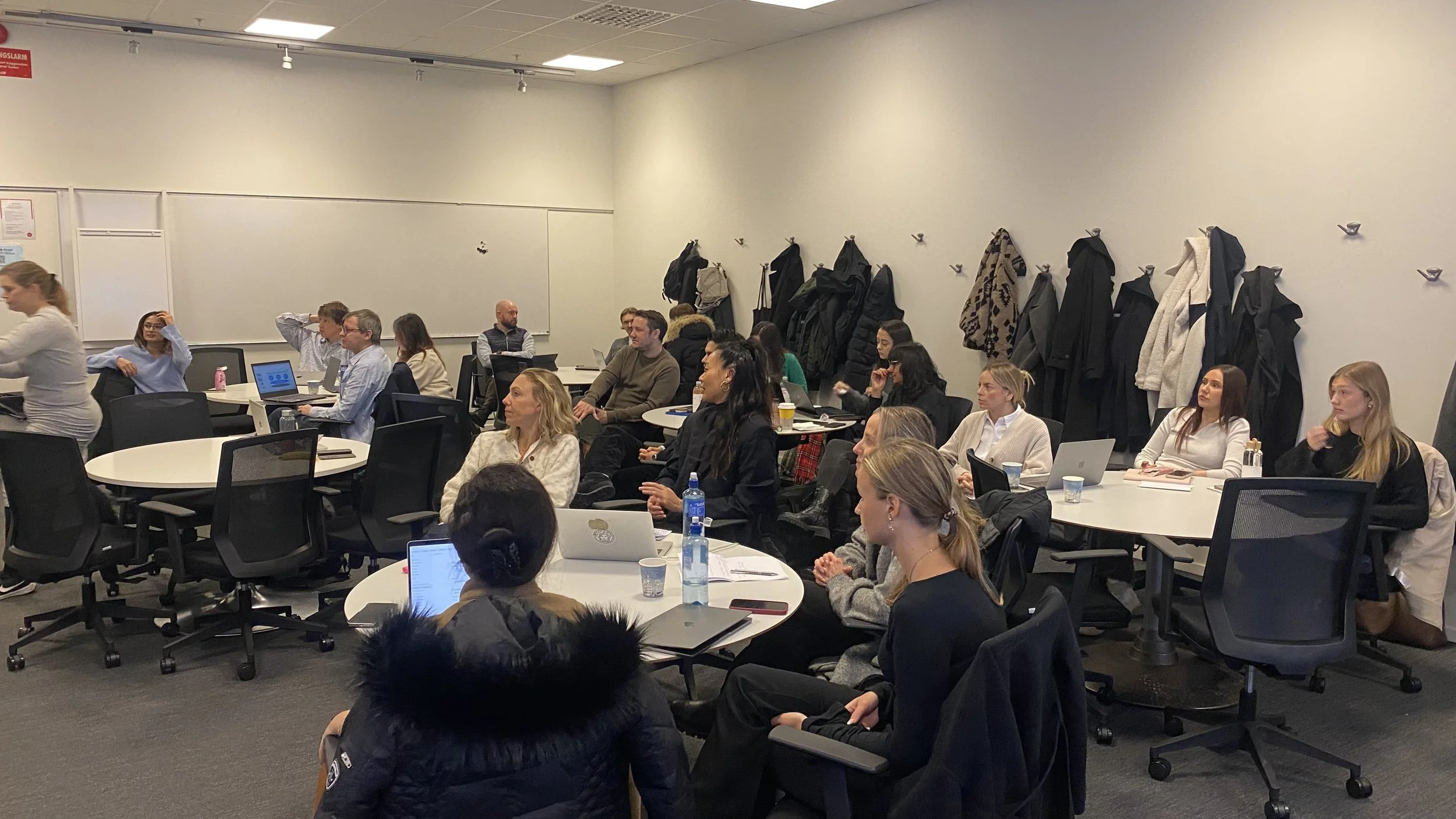
Guest Lecturer, IHM Business School
Overview
I designed and taught the full course "Kundcentrerad Tjänst- och Produktinnovation" at IHM Business School, part of their Customer Experience Specialist program (56 hours total). The course follows a "learning-by-doing" model → students work through one real case, “Stina”, from first assumption to final pitch, applying Design Thinking, Service Design, and Business Design as they go.
I built every lesson from scratch: the case material, the workshops, the theory sessions, and the final assessment structure → designed so each day's output became the raw material for the next.
Role: Course Designer & Lead Instructor
Format: 10 full-day sessions, IHM Business School Audience: Customer Experience Specialist students
Block AThe arc of the course
Days 1–3:
From assumption to insight
The course opens with the three lenses of innovation → Desirable, Feasible, Viable → and the five-step Design Thinking loop. Students meet "Stina," a stressed first-time visitor to Stockholm, role-play interviewing her, and build an
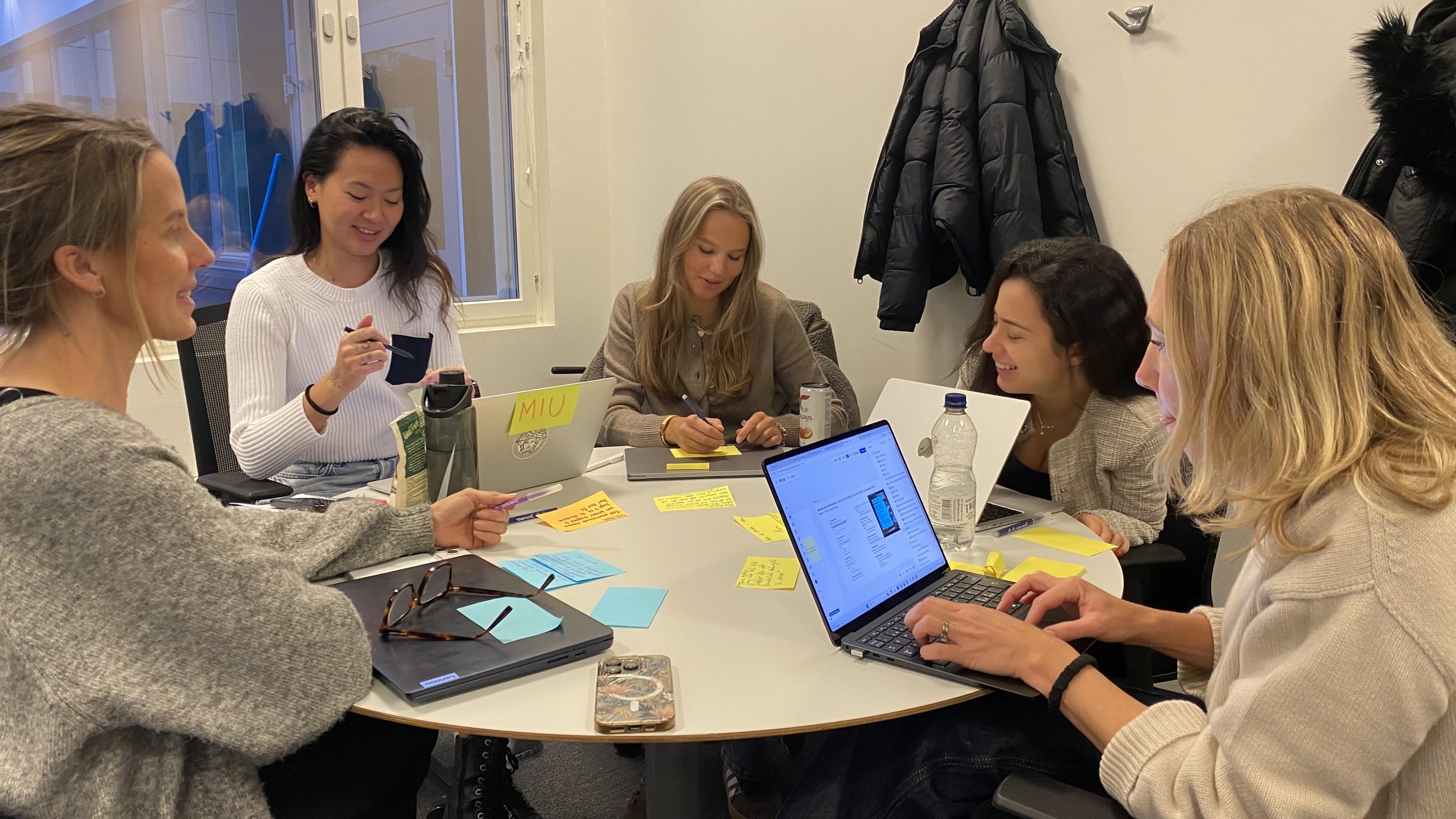
empathy map, and map her journey to find the pain points.
Day 3 is the reality check: a "Service Safari" homework assignment sends students into the real world to validate or kill their assumptions, before they converge on one Problem Statement and a set of "How Might We" questions.
Block CDays 8–10: The pitch
Block BDays 4–7:
From idea to evidence
Day 4 is pure ideation → Crazy 8s, mass brainstorming, affinity mapping, and dot voting down to a shortlist. Day 5 turns those ideas into low-fi digital prototypes, built deliberately rough so feedback stays honest.
Day 6 brings in Business Design → Value Proposition Canvas, revenue models, "who pays and why" → including a guest session with an external Service Design Director. Day 7 is testing: peer review of prototypes using "The Mom Test," structured feedback grids, and a full iteration cycle based on what was learned.
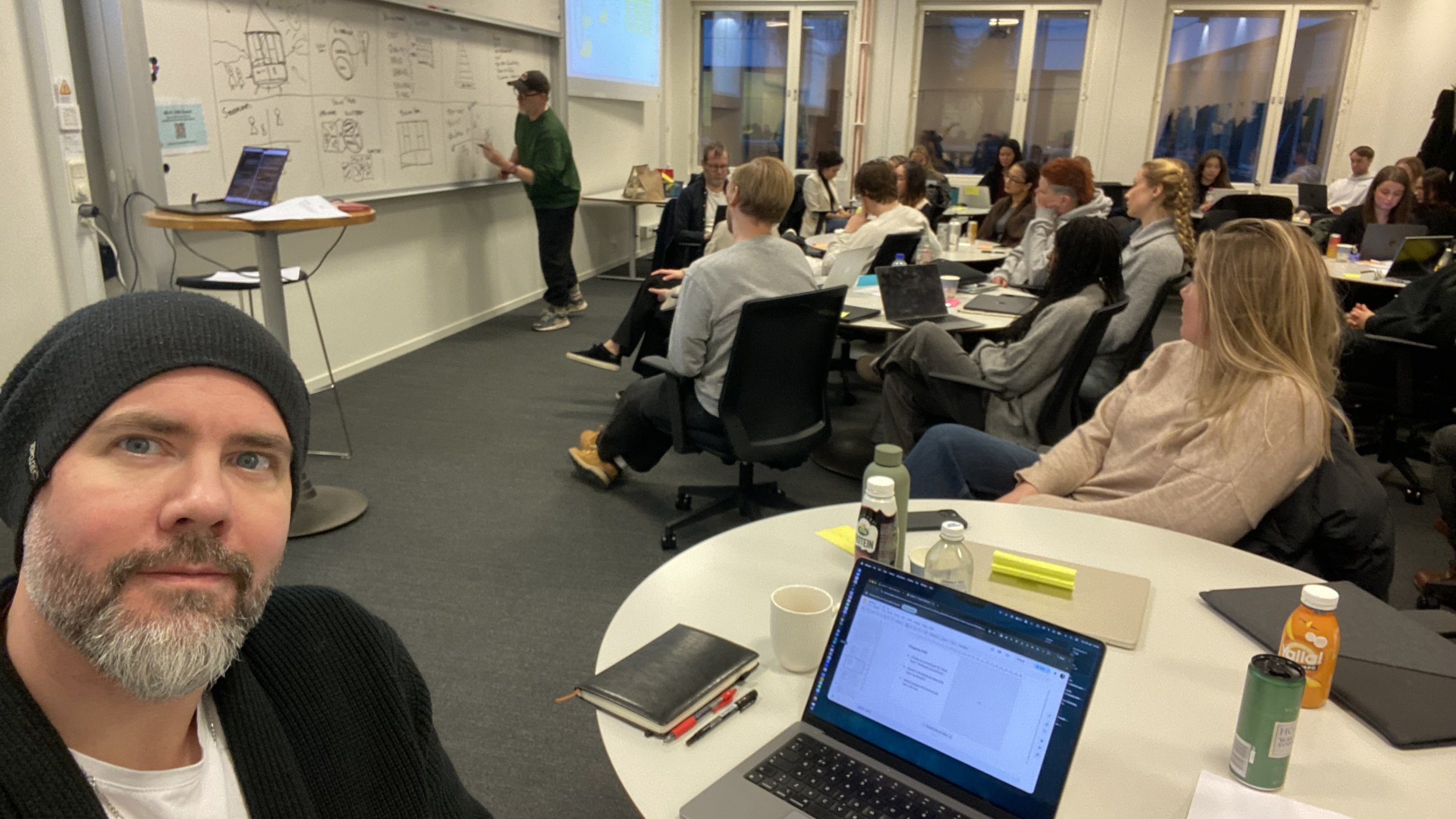
The final stretch shifts from problem-solving to storytelling. Day 8 introduces dramaturgy for pitches → Stina as the hero, not the team or the product → and students build their presentation as an analog storyboard before mining their own work from every previous lesson for evidence.
Day 9 is a full dress rehearsal: cross-group rehearsals with peers acting as investors, plus rhetoric training → body language, pacing, eye contact → and "The Hot Seat," a simulation of tough investor questions.
Day 10 is the real pitch: each group presents "Kollektivtrafikupplevelse 2.0" to a mock leadership panel, 15–20 minutes plus Q&A, followed by an individual written exam on the underlying theory.
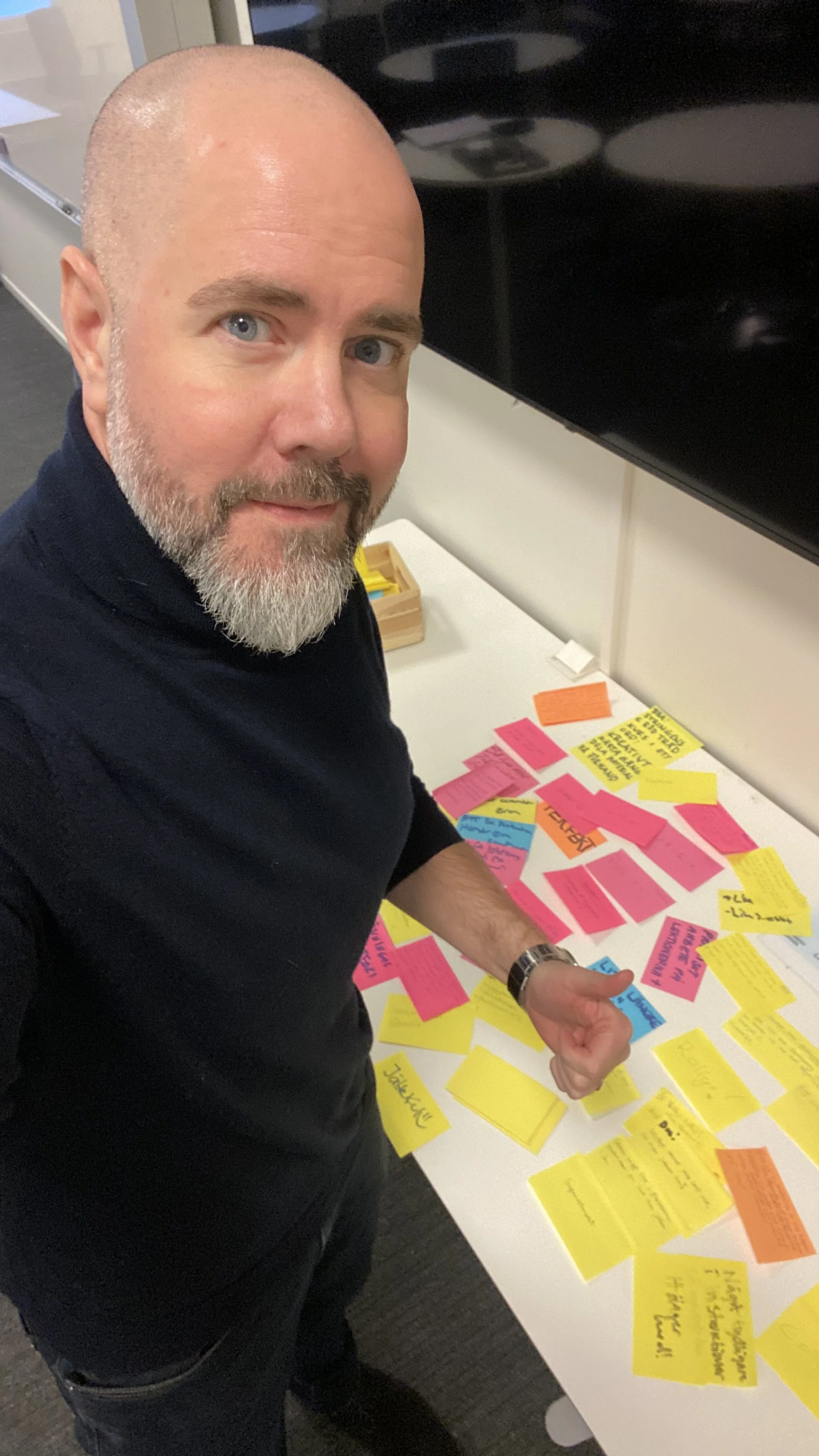
What students walked away with.
By the end, every group had run the full loop itself
→ interviews, journey mapping, field validation, ideation, prototyping, testing, business framing, and a pitch → using the same case throughout, so each step built visibly on the last.
The structure was designed so that by Day 10, the pitch wasn't a new exercise; it was a synthesis of nine days of their own evidence.
Curious about the course materials or how it was structured?
Get in touch.